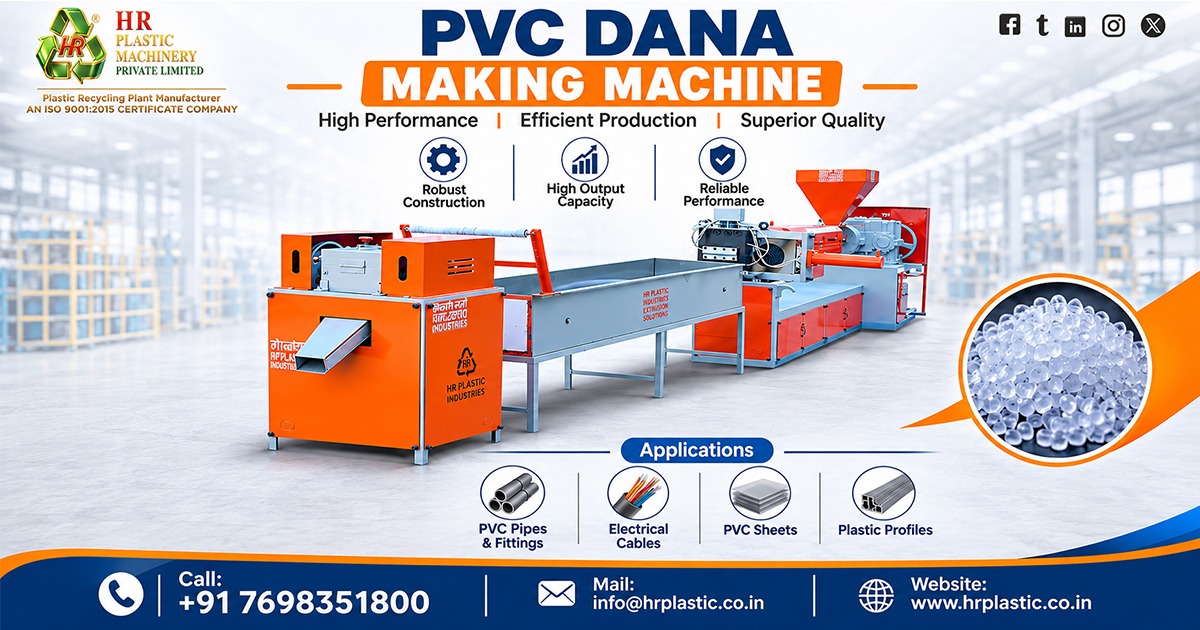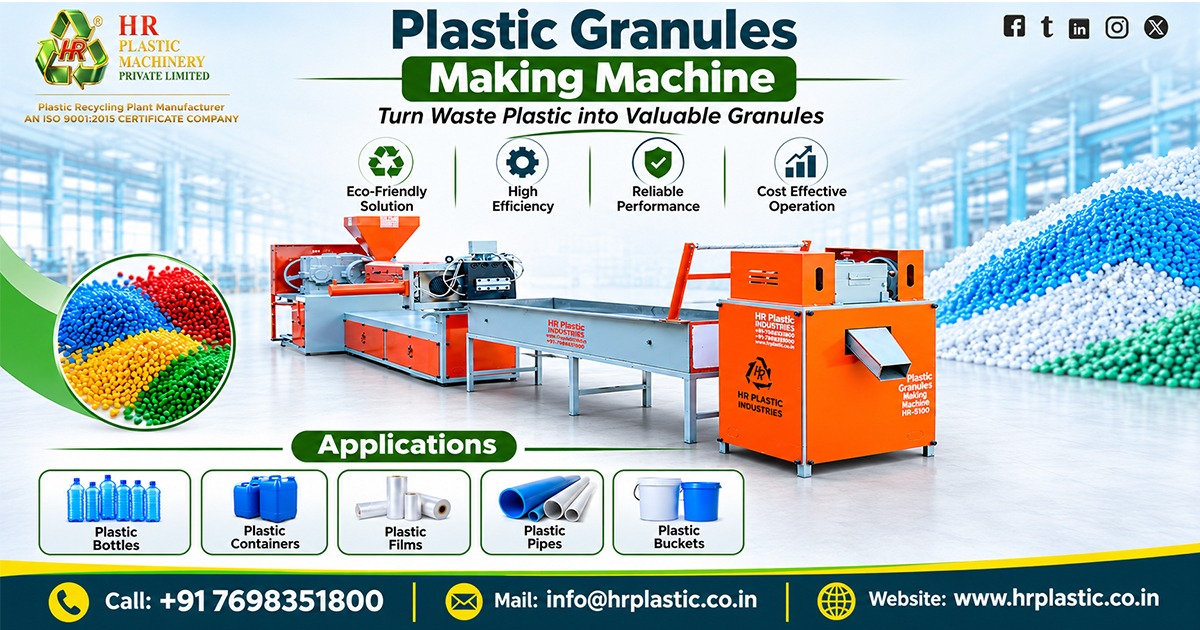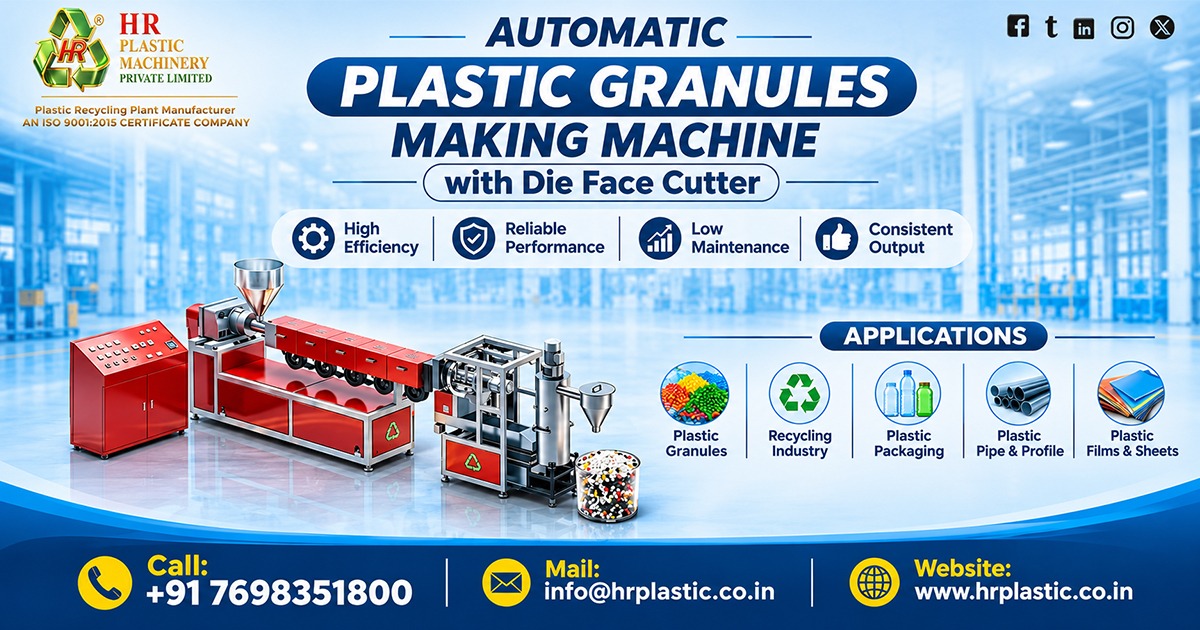
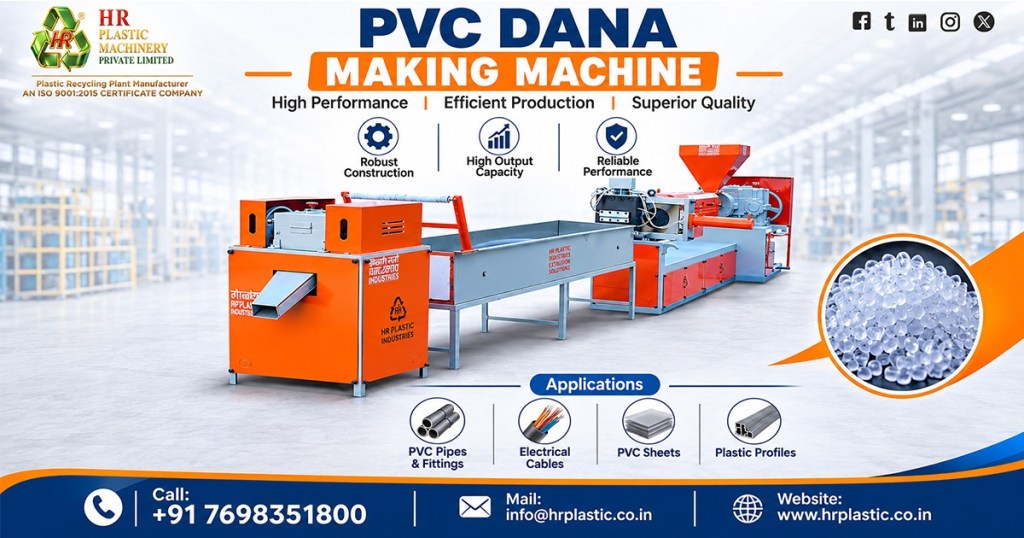
Plastic recycling and granule manufacturing require consistent material processing to produce reusable plastic pellets. A PVC pelletizing machine for efficient plastic granule manufacturing helps convert processed PVC material into manageable granules. HR Plastic Machinery Private Limited provides manufacturing support from Ahmedabad, Gujarat, India.
How PVC Pelletizing Fits Into Plastic Granule Production
PVC pelletizing is an important stage in plastic processing where prepared material is converted into small, reusable granules for further manufacturing.
The process generally involves:
- Material Preparation: PVC waste or processed material is sorted and prepared according to the required production process.
- Feeding: Prepared material is supplied to the pelletizing system.
- Melting and Processing: The material is processed under controlled temperature and operating conditions suitable for PVC.
- Pellet Formation: Processed material passes through the selected pelletizing arrangement to form granules.
- Collection: Finished pellets are collected for cooling, inspection, storage, or further production.
The actual process configuration depends on the machine design, PVC formulation, and required granule characteristics.
Production Challenges That Affect PVC Granule Consistency
Plastic processors may experience variations in pellet quality when material preparation, temperature control, or machine operation is inconsistent.
Common challenges include:
- Uneven Granule Formation: Inconsistent feeding or processing conditions can affect pellet size and shape.
- Material Contamination: Dust, foreign particles, and mixed plastic materials can influence the final output.
- Temperature Variation: PVC requires suitable thermal processing conditions to avoid material degradation.
- Production Interruptions: Poor material flow, unsuitable machine settings, or component wear can interrupt production.
- Difficult Material Handling: Improper feeding and collection arrangements can create operational difficulties.
Addressing these issues requires attention to the complete processing line rather than evaluating the pelletizing machine alone.
Technical Factors to Evaluate Before Selecting a Pelletizing System
The right equipment depends on the PVC material, production target, and operating requirements of the manufacturing facility.
Buyers should evaluate the following points:
1. Required Production Capacity: Determine the expected material input per hour and actual production requirements. Avoid selecting equipment based only on maximum advertised output.
2. PVC Material Type: Discuss whether the process involves rigid PVC, flexible PVC, recycled PVC, or a particular PVC formulation.
3. Temperature Control: Check how the machine manages processing temperatures because PVC is sensitive to excessive heat.
4. Screw and Processing Arrangement: Understand the screw configuration and material-handling mechanism offered for the intended application.
5. Pellet Size Requirements: Specify the required granule dimensions and acceptable variation in output.
6. Automation Requirements: Consider the level of operator involvement required for feeding, temperature adjustment, and production monitoring.
7. Electrical and Space Requirements: Verify connected load, installation dimensions, operating clearance, and material movement arrangements.
8. Future Production Planning: Consider whether the equipment will accommodate expected changes in material type or production volume.
A detailed discussion of these requirements helps prevent capacity mismatches and unnecessary operating complications.
What Happens Inside a PVC Pelletizing Machine?
The working mechanism depends on the selected pelletizing design. However, a typical plastic extrusion and pelletizing process follows a defined sequence.
Step 1 – Raw Material Preparation
PVC material is prepared according to the formulation and processing requirements. Contamination and unsuitable material should be addressed before feeding.
Step 2 – Controlled Material Feeding
Prepared material enters the machine through its feeding arrangement. Consistent feeding helps maintain stable material movement.
Step 3 – Extrusion and Material Processing
The screw and barrel arrangement processes the material under controlled operating conditions. Temperature management is particularly important during PVC processing.
Step 4 – Pellet Formation
The processed material moves towards the pelletizing section, where it is converted into granules using the machine’s designated cutting arrangement.
Step 5 – Cooling and Collection
Depending on the pelletizing configuration, the granules undergo the required cooling and collection process before storage or further manufacturing.
The final arrangement should be confirmed with the manufacturer according to the intended PVC formulation and output requirements.
Installation Conditions That Influence Machine Performance
Installing plastic processing equipment requires more than allocating floor space. The plant layout should support material movement, operator access, and maintenance activities.
Before installation, consider:
- Floor Preparation: Ensure the installation area can support the machine’s weight and operating conditions.
- Machine Positioning: Keep sufficient space around feeding, processing, and output sections.
- Electrical Connection: Confirm the required power supply and electrical arrangements with the manufacturer.
- Ventilation: Provide suitable ventilation and process-specific safety arrangements.
- Material Storage: Plan separate areas for incoming material, prepared feedstock, and finished granules.
- Safety Clearance: Maintain accessible emergency controls and suitable operator movement space.
After installation, commissioning should include checking the machine’s mechanical and electrical arrangements, control functions, and material flow.
Initial production trials should be conducted using the intended material and manufacturer-recommended operating conditions.
Routine Maintenance and Common Operating Problems
Regular maintenance helps identify developing problems before they interrupt production. PVC processing equipment should be inspected according to its operating conditions and supplier recommendations.
Important maintenance activities:
- Inspect screws, barrels, and other material-contact components for wear.
- Check pellet cutting components for condition and consistent operation.
- Examine electrical connections and temperature-control systems.
- Keep feeding and material collection areas clean.
- Follow recommended lubrication practices for applicable moving components.
- Maintain records of servicing, component replacement, and operating problems.
Troubleshooting reference:
| Common Issue | Possible Cause | Practical Check |
| Uneven pellet size | Inconsistent cutting or material flow | Inspect the cutting arrangement and feeding consistency |
| Irregular material output | Feeding variation or unsuitable settings | Review material preparation and operating conditions |
| Poor pellet appearance | Material contamination or processing variation | Check feedstock quality and process settings |
| Frequent production stoppage | Component wear or material blockage | Arrange inspection by qualified maintenance personnel |
| Temperature fluctuations | Control or heating system issues | Check temperature readings and control-system condition |
Always isolate the machine from its power source before authorized maintenance work. Internal electrical or mechanical repairs should be handled by qualified personnel.
Four Services for Plastic Processing Equipment Requirements
HR Plastic Machinery Private Limited can be approached to discuss requirements related to plastic processing machinery.
1. Machine Requirement Consultation: Discuss PVC material type, production objectives, and processing requirements.
2. Equipment Selection Guidance: Evaluate suitable machine configurations according to the intended granule manufacturing process.
3. Production Planning Assistance: Review capacity expectations, material feeding, and equipment placement requirements.
4. Technical Support Coordination: Discuss operating requirements, maintenance considerations, and spare-part planning.
Planning PVC Machinery Requirements With HR Plastic Machinery Private Limited
Selecting a suitable machine involves understanding the complete production requirement, including the type of PVC material, desired output, and available factory infrastructure.
HR Plastic Machinery Private Limited operates with manufacturing support from Ahmedabad, Gujarat, India. Buyers can visit HR Plastic Machinery to explore the company’s machinery offerings and discuss relevant equipment requirements.
Before finalizing an order, buyers should communicate their material specifications, expected production volume, granule requirements, electrical arrangements, and installation conditions.
This information helps establish whether the proposed machine configuration is suitable for the intended production process.
Location
Ahmedabad is an important industrial base for plastic processing machinery and manufacturing-related activities. Businesses exploring PVC granule production equipment can connect with machinery suppliers across Ahmedabad, Sanand, Changodar, Vatva, Naroda, Odhav, Kathwada, Aslali, Bavla, Dholka, Bareja, Kheda, Nadiad, Anand, Vadodara, Halol, Bharuch, Ankleshwar, Vapi, Surat, Rajkot, Morbi, Jamnagar, and Gandhinagar in Gujarat.
Frequently Asked Questions
Q: Which PVC materials can be processed using a pelletizing machine?
A: PVC pelletizing equipment may be used for rigid or flexible PVC formulations, depending on the machine configuration. Material compatibility should be confirmed with the manufacturer before ordering.
Q: What determines the production capacity of a PVC pelletizing machine?
A: Capacity depends on machine design, screw configuration, material formulation, feeding consistency, and operating conditions. Buyers should discuss actual material requirements rather than relying only on rated output.
Q: Why is temperature control important during PVC pellet manufacturing?
A: PVC is sensitive to excessive processing temperatures. Suitable temperature management helps reduce the risk of thermal degradation and supports more consistent material processing.
Q: What information should buyers provide before requesting a machine quotation?
A: Share the PVC material type, expected hourly output, required pellet size, available installation space, power supply details, and automation preferences. These details help suppliers assess the appropriate configuration.
Conclusion
Consistent PVC granule manufacturing depends on suitable material preparation, controlled processing, and an appropriately configured pelletizing system. Buyers should assess capacity, temperature management, maintenance access, and installation requirements before purchasing. HR Plastic Machinery Private Limited offers manufacturing support from Ahmedabad, Gujarat, India, for machinery-related requirements.
Planning a PVC granule manufacturing setup? Contact HR Plastic Machinery Private Limited to discuss your material requirements, machine selection, production planning, and technical assistance.
Visit: http://www.hrplastic.co.in
Email: info@hrplastic.co.in , sales@hrplastic.co.in
Call: +91 7698351800