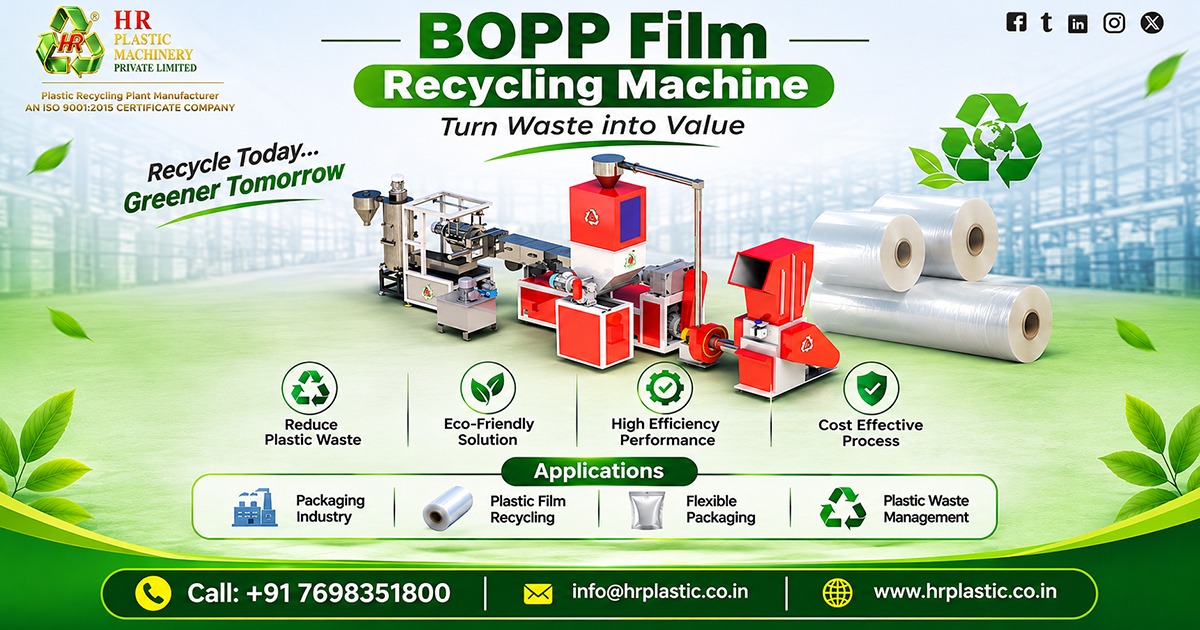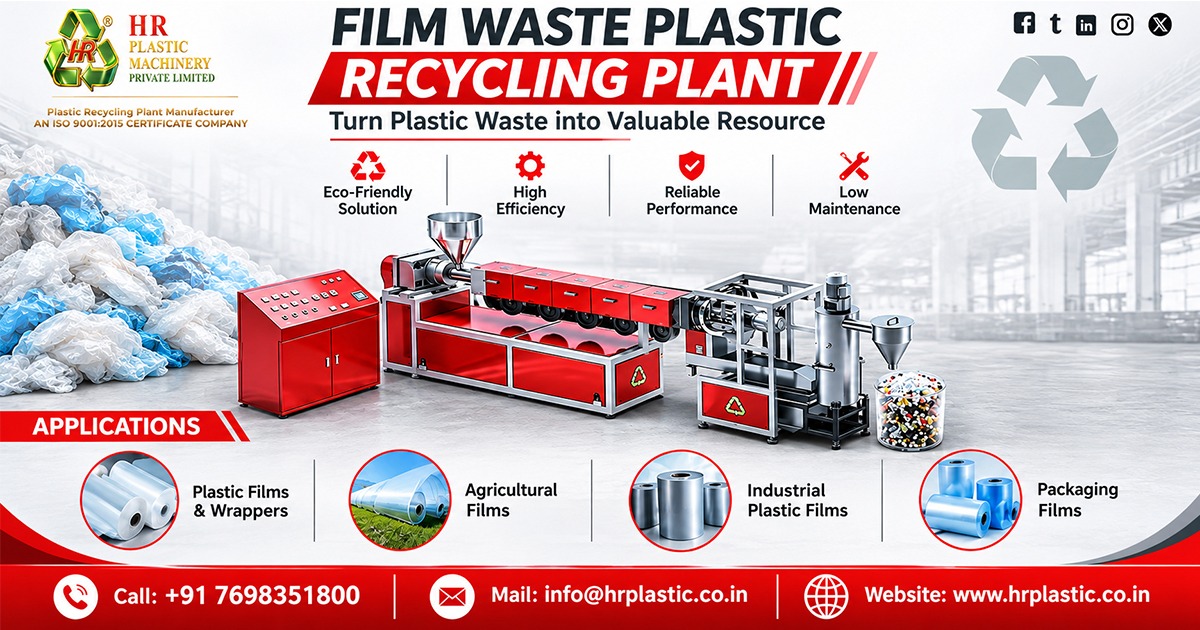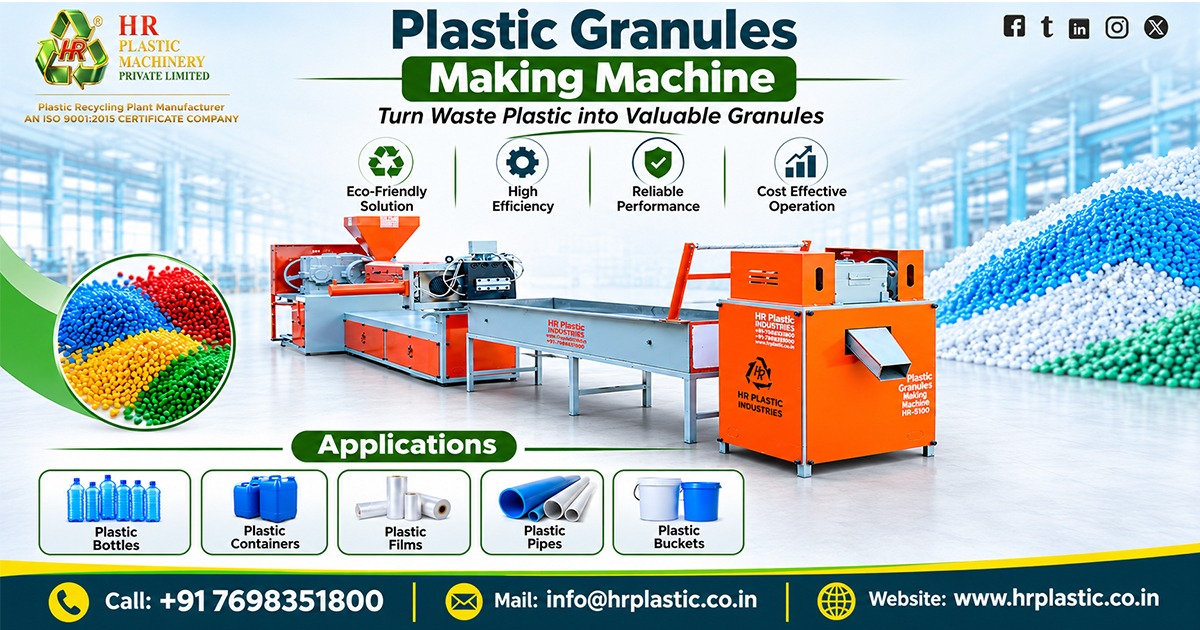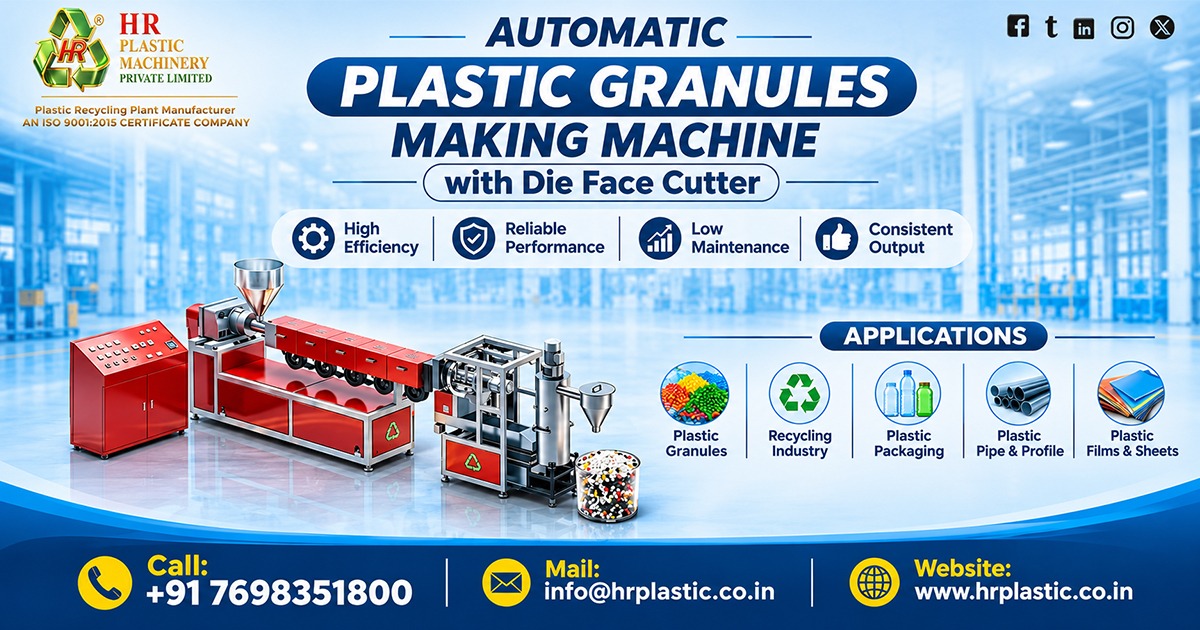
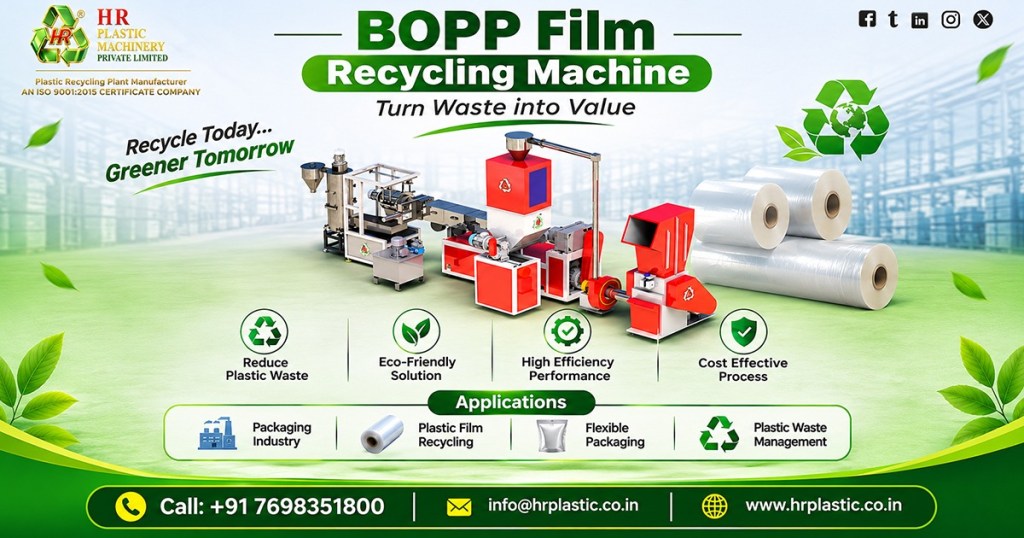
Plastic film waste requires controlled processing to recover reusable material and reduce disposal challenges. Choosing the right BOPP film recycling machine manufacturer for plastic film recycling helps businesses plan an efficient recycling process based on material type, contamination level, and production requirements.
Understanding BOPP Film Recycling and Its Industrial Role
BOPP (Biaxially Oriented Polypropylene) film is commonly used in flexible packaging, labels, wrapping materials, and laminated packaging. Manufacturing units that process these materials may generate rejected rolls, edge trims, leftover film, and production scrap.
Instead of sending suitable plastic waste for disposal, recycling facilities can process it into reusable plastic granules through mechanical recycling.
A dedicated recycling plant helps manage this material through controlled processing stages, including:
- Feeding and preparation of plastic film waste
- Size reduction and material conditioning
- Melting and plastic extrusion
- Melt filtration to remove suitable impurities
- Pelletizing to produce reusable plastic granules
The actual process configuration depends on the condition of the incoming scrap, its polymer composition, contamination level, and the required output quality.
Choosing a Recycling Plant Based on BOPP Film Waste
Not every plastic recycling machine is suitable for every type of film scrap. Buyers should evaluate the incoming material and production targets before selecting equipment.
Important selection factors include:
1. Type of Plastic Waste
- BOPP film production scrap
- Rejected packaging film rolls
- Clean film edge trims
- Printed or laminated film waste
- Mixed PP and other plastic film materials
Different material combinations may require different processing arrangements. Confirm compatibility before purchasing.
2. Required Processing Capacity
Estimate the quantity of scrap available per shift or per day. Machine capacity should match the regular material supply rather than only the highest expected production volume.
3. Single-Stage or Two-Stage Processing
A single-stage arrangement may suit certain relatively clean and consistent materials. Two-stage processing can be considered when additional melt processing and filtration are required.
4. Material Feeding and Preparation
Flexible film can be difficult to feed consistently because it is lightweight and tends to fold or stick together. Discuss suitable feeding and material preparation arrangements with the manufacturer.
5. Power and Factory Requirements
Check the following before finalizing the machinery:
- Available electrical supply
- Required installation area
- Material storage space
- Operator access and safety arrangements
- Ventilation and process requirements
- Space for finished granule collection
6. Maintenance and Operating Costs
Consider screw and barrel wear, screen replacement, heating requirements, cleaning frequency, and availability of spare parts when calculating long-term operating expenses.
How BOPP Film Waste Is Converted into Reusable Granules
The recycling process generally involves multiple stages. The exact arrangement depends on the selected plant and the quality of incoming material.
Step 1: Material Sorting and Preparation
The collected film scrap is inspected and separated according to polymer type, colour, printing, and contamination level. Non-compatible materials and unwanted foreign objects should be removed before processing.
Step 2: Feeding and Material Processing
Prepared film waste is supplied to the recycling system. Depending on the material condition and plant configuration, an agglomeration or suitable feeding arrangement may be used to improve material handling.
Step 3: Melting and Extrusion
The prepared plastic enters the extruder, where controlled heating and screw movement convert the material into molten plastic. Temperature and processing conditions must be suitable for the particular polymer.
Step 4: Melt Filtration and Pelletizing
The molten material passes through an appropriate filtration arrangement to remove processable contaminants. It is then converted into plastic granules through the selected cutting and pelletizing system.
The final granules should be inspected for consistency, contamination, colour variation, and suitability for the intended reuse.
Quality Checks That Matter Before Purchasing the Machine
Machine selection should not depend only on its quoted production capacity. Buyers should evaluate the complete processing arrangement.
Use the following checklist when discussing a project with a manufacturer:
| Inspection Point | What to Verify |
| Material compatibility | Suitability for the intended BOPP film scrap |
| Processing capacity | Expected output under defined operating conditions |
| Extruder arrangement | Screw and barrel suitability for the material |
| Filtration | Screen arrangement and replacement requirements |
| Temperature control | Heating and process control provisions |
| Granule quality | Output consistency and contamination level |
| Electrical requirements | Connected load and power supply |
| Safety | Guards, emergency stops, and operator protection |
| Documentation | Machine details, operating instructions, and electrical information |
| Spare parts | Availability of essential replacement components |
Important: Ask the manufacturer to evaluate an actual sample of your film waste whenever possible. Printed, laminated, adhesive-coated, and mixed-material films may behave differently during recycling.
Installation, Operation and Maintenance Planning
A recycling plant requires proper installation and regular maintenance to maintain stable production.
Before installation:
- Prepare a suitable foundation and machine layout.
- Confirm electrical connections and utility requirements.
- Arrange adequate raw material storage and finished granule handling space.
- Keep sufficient access for cleaning, inspection, and component replacement.
- Plan operator training and safety procedures.
During operation:
- Feed material consistently.
- Follow recommended processing temperatures.
- Monitor pressure and melt filtration conditions.
- Observe changes in machine noise, vibration, and output.
- Inspect the granules regularly.
For routine maintenance:
- Clean material feeding and collection areas.
- Inspect the screw, barrel, and heating components.
- Check screen condition and replace it when required.
- Examine electrical connections and control systems.
- Follow the manufacturer’s maintenance schedule.
Common Operating Problems and Practical Checks
| Problem | Possible Area to Inspect |
| Uneven granule size | Cutting system and feeding consistency |
| Excessive material pressure | Screen blockage or unsuitable processing conditions |
| Unstable output | Feeding consistency and material variation |
| Poor granule appearance | Contamination, moisture, or temperature conditions |
| Frequent machine stoppage | Electrical system, wear components, and maintenance |
The correct corrective action should be based on the machine design and actual operating conditions.
Project Configuration for Different Recycling Requirements
A plastic film recycling project should be planned according to the type and quantity of material available.
For example:
- Clean production scrap: May require a relatively straightforward feeding and extrusion arrangement.
- Printed film waste: Requires careful evaluation of ink, coating, and contamination.
- Laminated packaging waste: Needs compatibility assessment because different material layers may not separate through ordinary mechanical recycling.
- Mixed film waste: Requires sorting and material identification before selecting the processing line.
- High-volume recycling operations: Need capacity planning, material handling arrangements, and suitable production coordination.
HR Plastic Machinery Private Limited offers a two-stage plastic recycling plant specifically listed for polythene LD, PP, BOPP film waste, and raffia. Buyers should confirm the appropriate configuration for their actual material and production requirements.
SERVICES
- Product Consultation: Understanding the customer’s plastic film waste, processing needs, and production objectives.
- Machinery Selection: Discussing suitable recycling plant arrangements according to material type and capacity requirements.
- Manufacturing and Testing Coordination: Supporting machinery preparation and quality checking before delivery.
- Technical and Service Support: Providing product-related guidance and assistance for machinery operation and maintenance.
LOCATION
Gujarat has a diverse industrial base, including plastic processing, packaging, manufacturing, and recycling-related businesses. Suitable plastic recycling machinery can support units looking to manage production scrap and recover reusable materials. Relevant industrial locations include Ahmedabad, Sanand, Changodar, Bavla, Dholka, Gandhinagar, Kalol, Mehsana, Kadi, Himmatnagar, Vadodara, Savli, Halol, Bharuch, Ankleshwar, Dahej, Surat, Hazira, Vapi, Valsad, Rajkot, Morbi, Jamnagar, Bhavnagar, and Junagadh.
Why Choose HR Plastic Machinery Private Limited?
HR Plastic Machinery Private Limited has been manufacturing plastic processing and recycling machinery since 1987. Its product range includes plastic recycling plants, two-stage recycling systems, plastic granule making machines, and other processing equipment.
For businesses evaluating a recycling project, the company can be approached to discuss material compatibility, processing requirements, and suitable machinery arrangements.
With manufacturing support from Ahmedabad, Gujarat, India, HR Plastic Machinery provides machinery solutions for different plastic recycling requirements.
Visit the official website: https://hrplastic.co.in/ to explore its machinery range and submit your enquiry.
Frequently Asked Questions
Q1. Can BOPP film waste be converted into reusable plastic granules?
A: Suitable BOPP film waste can be processed through mechanical recycling and extrusion. The final granule quality depends on material composition, contamination, printing, and processing conditions.
Q2. Is a two-stage recycling plant suitable for BOPP film scrap?
A: A two-stage plant can be considered for suitable BOPP film waste where additional processing and filtration are required. The final selection should depend on the scrap condition and desired output.
Q3. What information should I provide when requesting a recycling machine quotation?
A: Share the plastic type, daily scrap quantity, contamination level, material form, expected output, and available factory utilities. This helps the manufacturer assess the machinery requirements.
Q4. How can manufacturers maintain consistent recycled granule quality?
A: Maintain proper material sorting, stable feeding, suitable processing temperatures, and regular filtration checks. Periodic output inspection also helps identify variations during production.
Conclusion
Managing plastic film scrap requires suitable machinery, proper material preparation, and controlled processing. A BOPP Film Recycling Machine Manufacturer for Plastic Film Recycling can help businesses evaluate the right equipment for their requirements. HR Plastic Machinery provides manufacturing support from Ahmedabad, Gujarat, India, for plastic recycling projects.
Planning to recycle BOPP or other plastic film waste? Contact HR Plastic Machinery Private Limited to discuss your material, capacity, and plastic recycling machinery requirements.
Visit: http://www.hrplastic.co.in
Email: info@hrplastic.co.in , sales@hrplastic.co.in
Call: +91 7698351800