Introduction
A PVC compounding plant in Rajasthan for plastic processing helps manufacturers prepare PVC materials by blending resin with stabilisers, lubricants, fillers, pigments, and other additives. Proper equipment selection and material preparation are important for achieving a consistent compound suitable for downstream plastic manufacturing.
Understanding the Role of a PVC Compounding Plant in Plastic Manufacturing
PVC compounding is the process of combining PVC resin with selected additives to achieve the required processing and material properties.
The prepared compound can be supplied in powder or pellet form, depending on the production process and the requirements of the next manufacturing stage.
A typical PVC compounding operation involves:
- Raw Material Feeding: PVC resin and additives are measured and introduced into the mixing equipment.
- High-Speed Mixing: Ingredients are blended to distribute additives throughout the resin.
- Temperature Management: Heating and cooling stages help prepare the mixture for further processing.
- Melt Processing: Where required, an extrusion system processes the prepared compound.
- Pellet Formation: The processed material can be converted into granules for suitable downstream applications.
The exact arrangement depends on whether the manufacturer needs dry blending, melt compounding, or a complete integrated production line.
How Material Preparation Influences the Final PVC Compound
Material preparation is an important stage because different additives perform different functions in PVC processing.
For example:
- PVC Resin: Provides the base polymer for the compound.
- Heat Stabiliser: Helps control thermal degradation during processing.
- Lubricants: Support material flow and processing behaviour.
- Fillers: Modify material properties and influence formulation cost.
- Pigments: Provide the required colour.
- Processing Aids: Help achieve the desired processing characteristics.
The mixing sequence, ingredient quantity, temperature, and processing time should be selected according to the formulation.
An important industrial consideration is that PVC is sensitive to excessive heat and prolonged processing. Therefore, temperature control and suitable equipment configuration should be considered during plant planning.
Industrial Applications That Depend on Consistent PVC Formulation
PVC compounds are used in several plastic manufacturing processes. The formulation changes according to the product’s flexibility, strength, appearance, and processing requirements.
Common application areas include:
- PVC Pipes and Fittings: Compounds are prepared according to the requirements of rigid pipe and fitting production.
- PVC Profiles: Formulations are used for products such as window profiles, channels, and other extruded sections.
- Cable Insulation: Flexible PVC compounds are used where electrical insulation and flexibility are required.
- PVC Sheets: Compound formulations support sheet extrusion for different industrial and commercial applications.
- Garden Hoses: Flexible PVC formulations are used in hose manufacturing.
- Industrial Plastic Components: Special formulations can be developed according to the required product characteristics.
Manufacturers should identify the final product before selecting the mixing and processing arrangement. A formulation suitable for rigid PVC pipes may not be appropriate for flexible cable insulation or hose production.
Matching Mixing and Extrusion Equipment to Production Needs
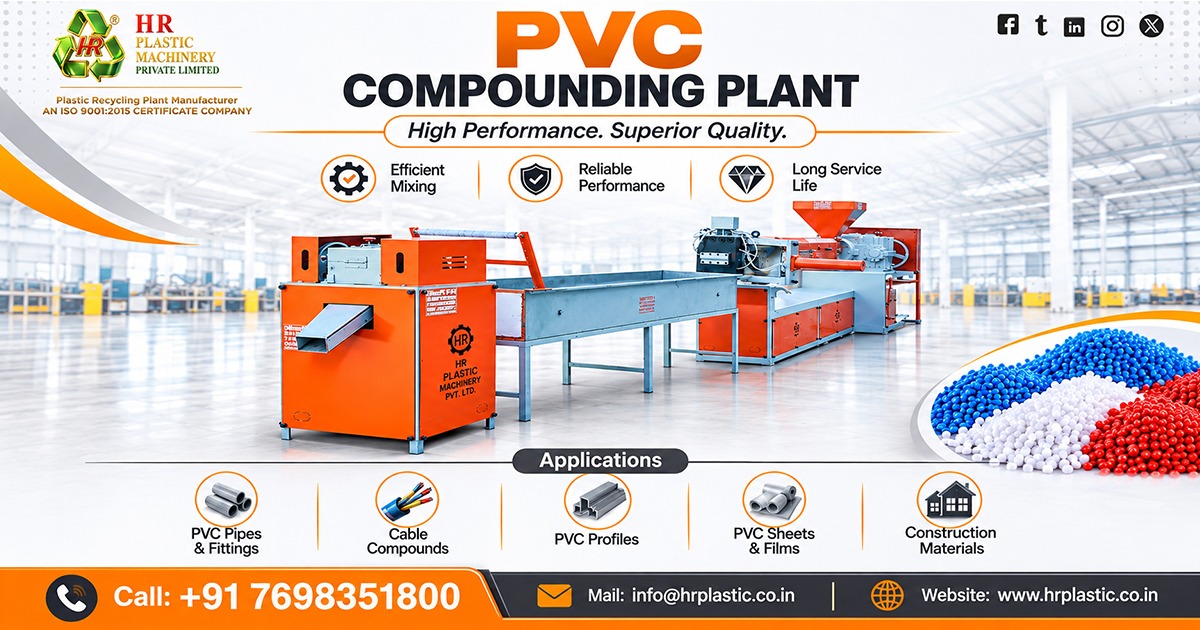
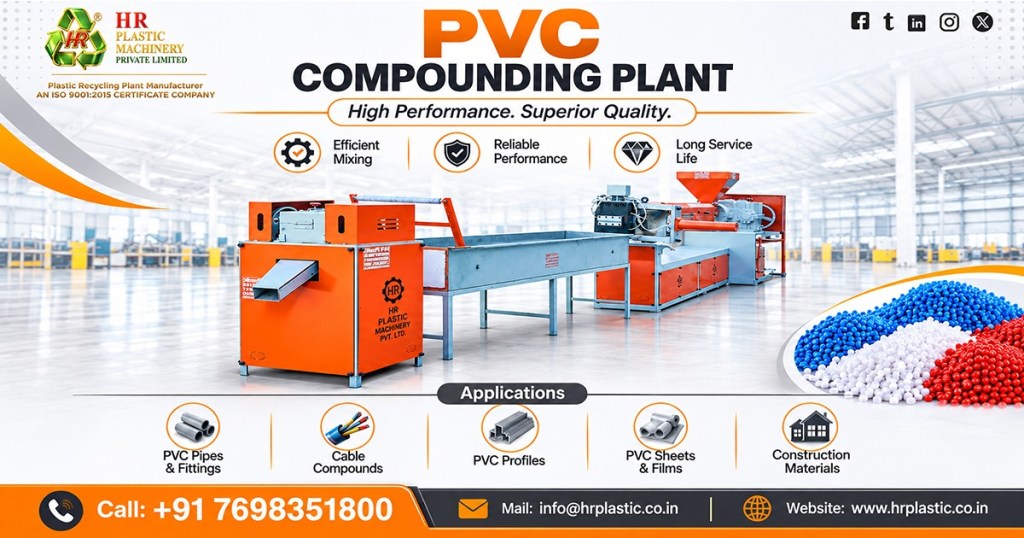
A PVC compounding plant may include separate mixing equipment or an integrated mixing and extrusion arrangement.
The main equipment configuration depends on the production method.
Important equipment considerations include:
- High-speed mixer for initial blending of PVC resin and additives.
- Cooling mixer for controlling the temperature of the prepared mixture.
- Feeding arrangement for transferring material into the next processing stage.
- Extruder for melting, mixing, and processing the formulation when melt compounding is required.
- Cooling and pelletising arrangements for producing granules where required.
Not every plant needs the same combination of equipment. For example, a manufacturer producing dry PVC blends for its own extrusion line may have different requirements from a business producing finished PVC compound granules for other processors.
A useful planning insight is to calculate production requirements based on the complete process rather than the extruder’s advertised output alone. Mixing time, material transfer, feeding consistency, cooling, and pelletising can influence the overall production flow.
Buyer Selection Checkpoints Before Finalising a Plant
Before purchasing a PVC compounding plant in Rajasthan for plastic processing, buyers should prepare the following technical information:
1. Final Product Type: Identify whether the intended output is rigid PVC compound, flexible PVC compound, dry blend, or finished granules.
2. Required Production Capacity: Calculate the expected hourly and daily production requirement. Consider actual operating hours and material changeovers.
3. Material Formulation: Share details of PVC resin, additives, fillers, and the required formulation. These details influence mixing and processing requirements.
4. Mixer and Extruder Compatibility: Confirm whether the proposed mixer, feeder, screw arrangement, and extrusion system are suitable for the intended PVC formulation.
5. Power and Installation Requirements: Check electrical load, floor space, machine layout, ventilation, cooling water, and material handling arrangements.
6. Maintenance and Spare Parts: Ask about cleaning access, wear components, spare-part availability, operating instructions, and maintenance requirements.
These checks help buyers compare machinery based on actual production needs instead of selecting equipment only by price or general output claims.
What to Discuss With a Machinery Manufacturer Before Ordering
A machinery quotation should clearly explain the equipment included in the proposed plant.
Buyers should request information about:
- Individual machine specifications and functions.
- Recommended raw material and formulation range.
- Mixing and processing sequence.
- Expected output under the specified operating conditions.
- Electrical and utility requirements.
- Installation layout and foundation requirements.
- Scope of commissioning, operator guidance, and after-sales support.
For a PVC compounding project, it is particularly important to clarify whether the quotation covers only a mixing system or includes extrusion, cooling, and pelletising equipment. This distinction helps prevent confusion during procurement and installation.
HR Plastic Machinery’s Role in Plastic Processing Equipment
HR Plastic Machinery Private Limited provides manufacturing support from Ahmedabad, Gujarat, India, for plastic processing and recycling machinery requirements.
According to its official website, the company’s product range includes:
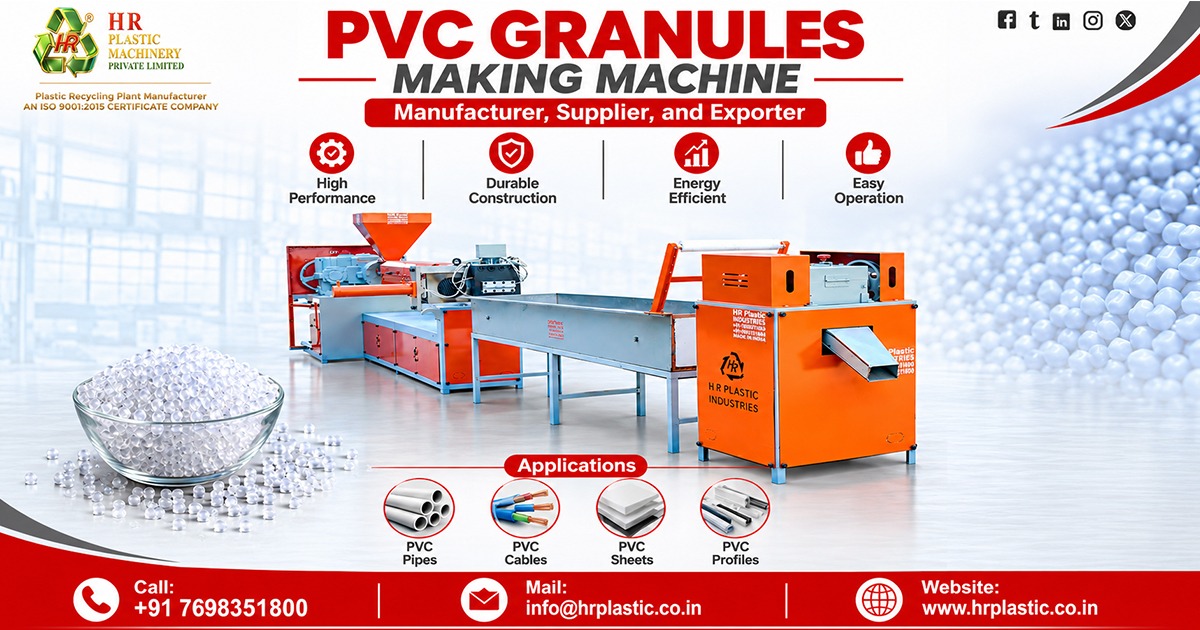
- PVC Mixture Machine
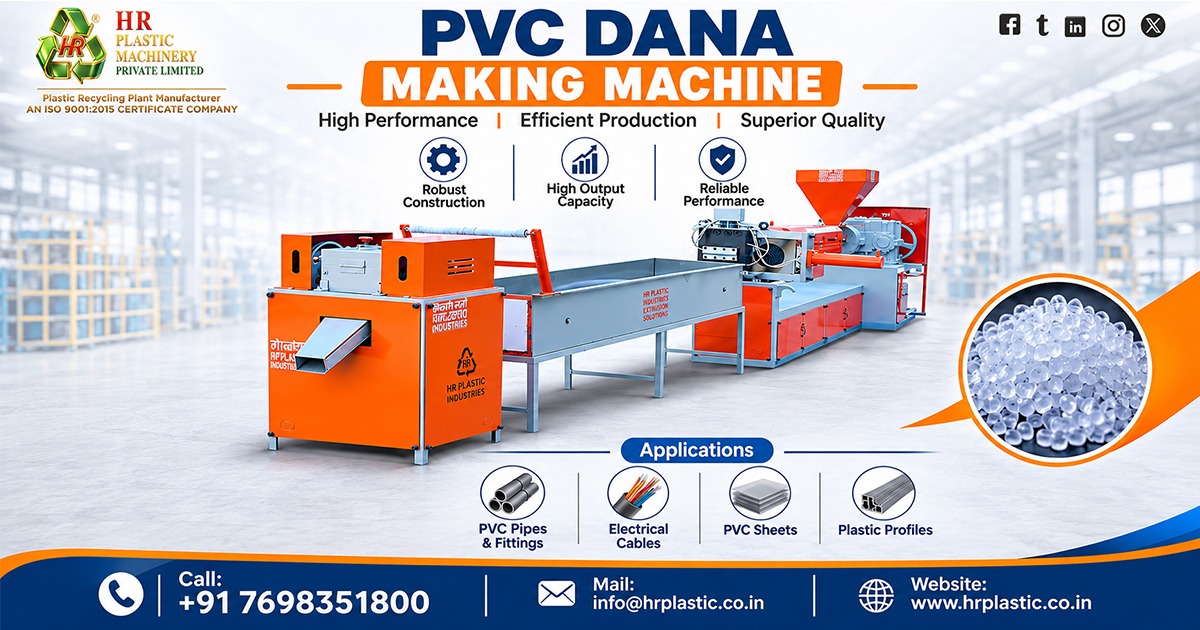
- Plastic Dana Making Machine
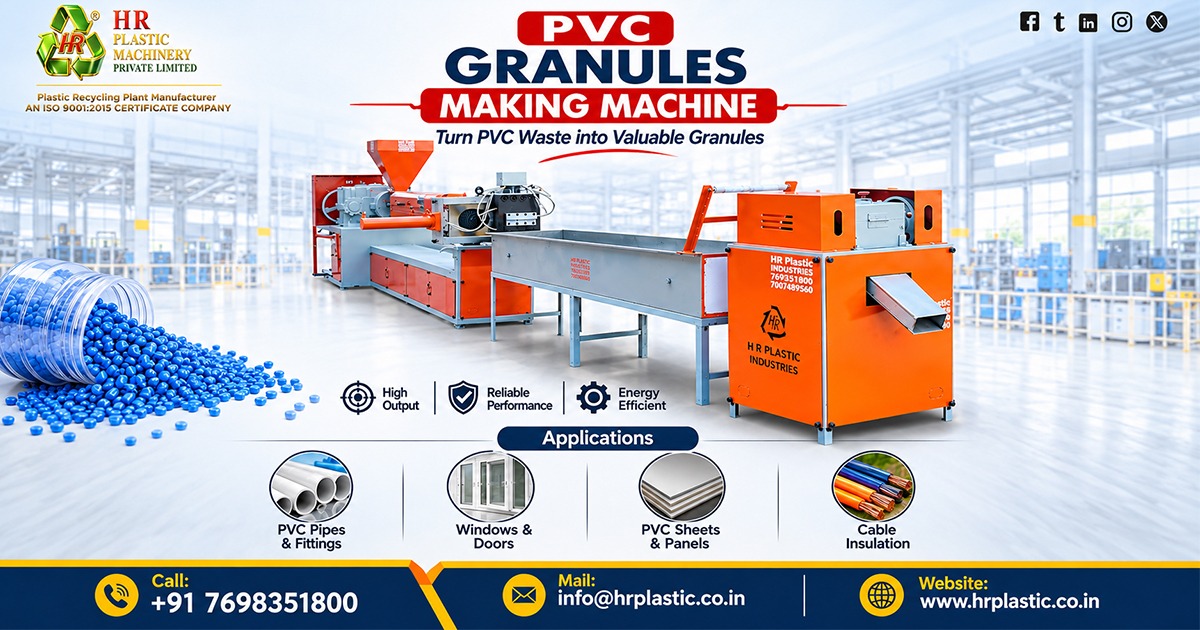
- Plastic Granules Making Machine
- Plastic Scrap Grinder Machine
- Automatic Plastic Dryer Machine
- Die Face Cutter
- Plastic Recycling Plants
These products are relevant to different stages of plastic material preparation, processing, and recycling. The company also provides information about its plastic processing machinery and plant offerings on its website.
For buyers planning a PVC compounding project, one point needs clarification: the published product range identifies a PVC Mixture Machine, but does not clearly specify a complete integrated PVC compounding plant. Therefore, buyers should discuss whether the required mixing, extrusion, cooling, and pelletising configuration is available for their particular project.
Visit HR Plastic Machinery Private Limited to explore its machinery range and contact the company with your production requirements.
PVC Processing Opportunities Across Rajasthan’s Industrial Regions
Rajasthan has established industrial areas supporting engineering, manufacturing, chemicals, textiles, and other production activities. RIICO has developed industrial infrastructure across the state, including major industrial regions such as Bhiwadi–Neemrana–Khushkhera and Jodhpur–Pali–Marwar.
Businesses exploring a PVC compounding plant in Rajasthan for plastic processing can evaluate machinery requirements according to their factory location, material sourcing, and downstream manufacturing plans.
Relevant cities and industrial locations include Jaipur, Sitapura, VKI Area, Bagru, Bhiwadi, Neemrana, Khushkhera, Ghiloth, Alwar, Jodhpur, Boranada, Pali, Balotra, Kota, Ranpur, Ajmer, Kishangarh, Bhilwara, Udaipur, Bikaner, Chittorgarh, Sikar, Sri Ganganagar, and Abu Road.
These locations represent different industrial and commercial centres across Rajasthan. HR Plastic Machinery Private Limited offers manufacturing support from Ahmedabad, Gujarat, for businesses looking to discuss plastic processing machinery requirements in Rajasthan.
Frequently Asked Questions
1. What is the main function of a PVC compounding plant?
A PVC compounding plant combines PVC resin with additives, stabilisers, lubricants, fillers, and pigments. It prepares material with specific properties for further plastic manufacturing.
2. Is a PVC mixture machine the same as a complete compounding plant?
No. A PVC mixture machine performs blending, while a complete compounding setup may also include extrusion, cooling, and pelletising equipment. The required configuration depends on the production process.
3. Which factors influence the selection of PVC compounding machinery?
Material formulation, required output, mixing method, processing temperature, equipment compatibility, available space, and utility requirements influence machinery selection.
4. Can manufacturers in Rajasthan contact HR Plastic Machinery for machinery requirements?
Yes. Buyers in Rajasthan can contact HR Plastic Machinery Private Limited through its official website to discuss their plastic processing requirements and clarify the available machinery configuration.
Conclusion
Selecting the right PVC processing equipment requires an understanding of material formulation, production targets, mixing arrangements, and downstream manufacturing needs. Businesses planning a PVC compounding plant in Rajasthan should evaluate the complete production process before purchasing machinery. Contact HR Plastic Machinery Private Limited to discuss your requirements and explore suitable plastic processing equipment.
Visit: http://www.hrplastic.co.in
Email: info@hrplastic.co.in , sales@hrplastic.co.in
Call: +91 7698351800