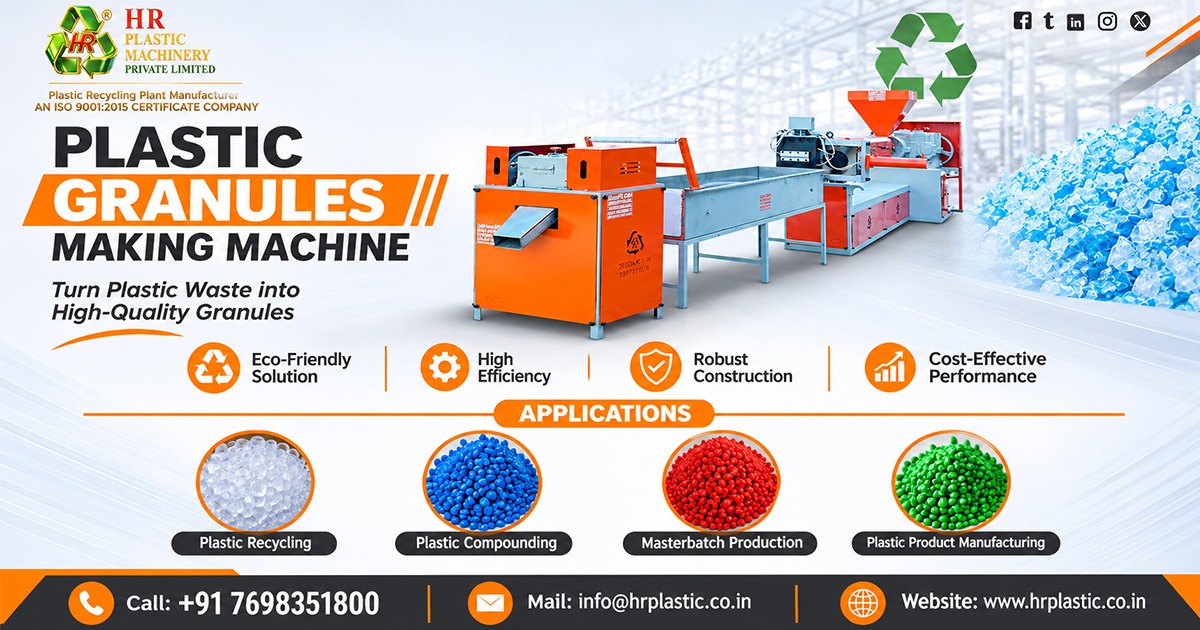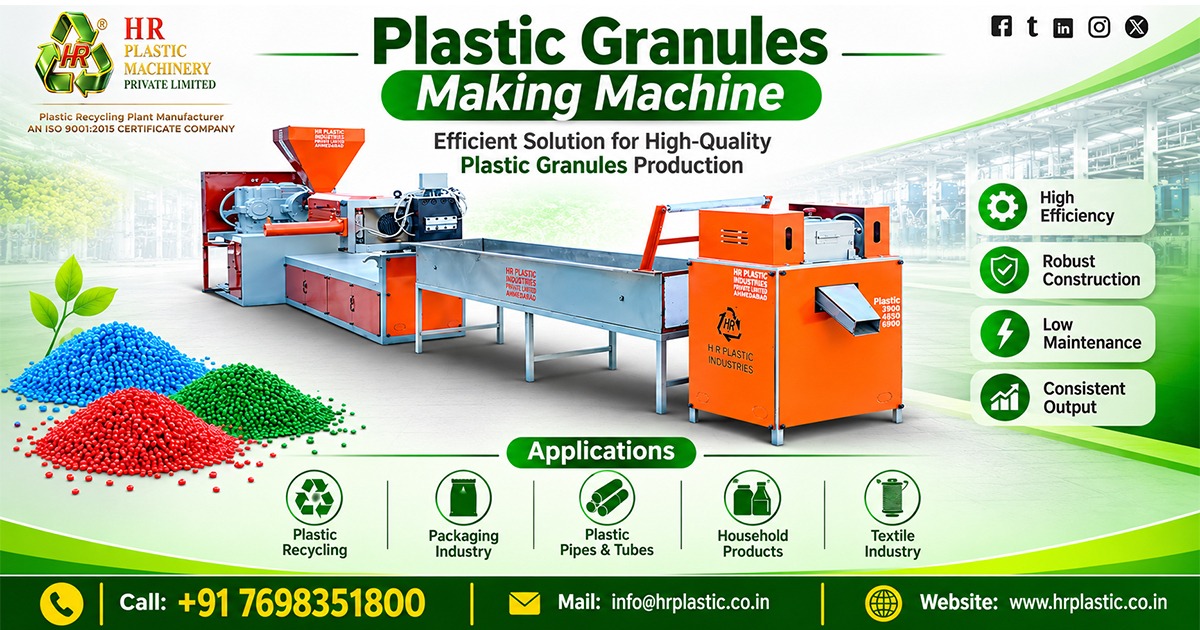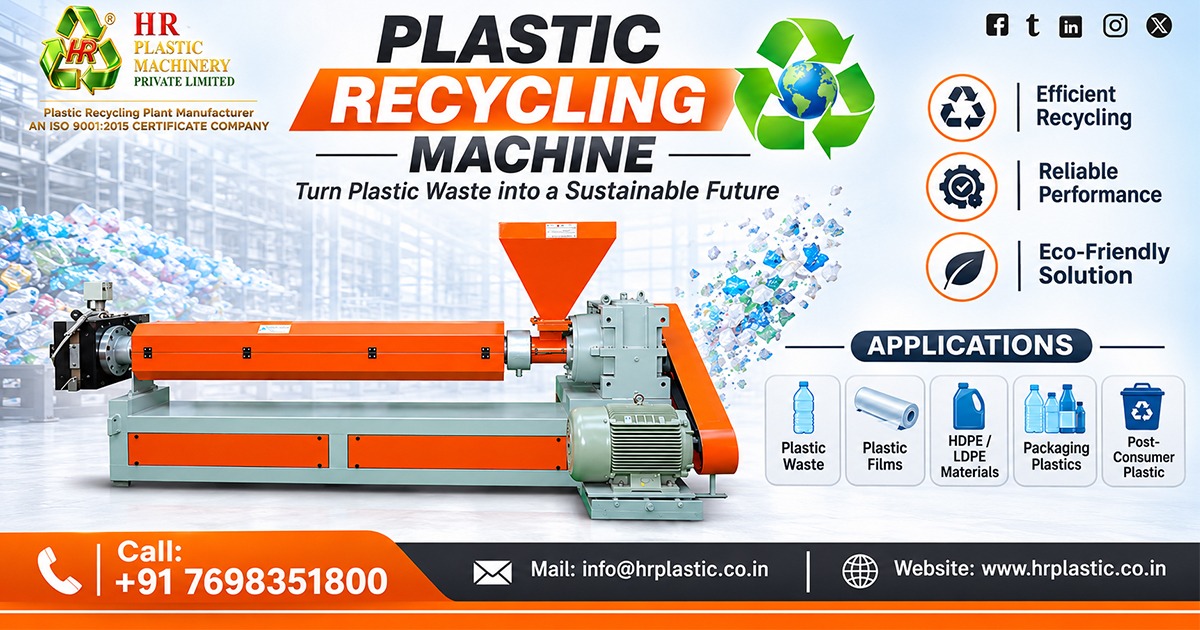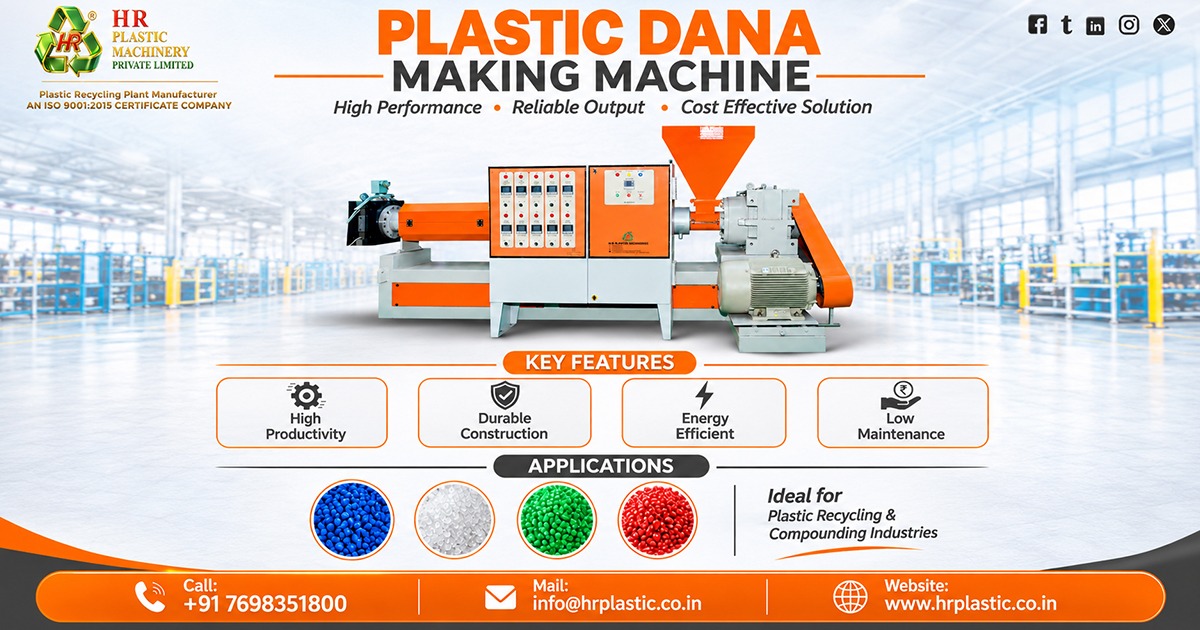
Plastic scrap becomes a production resource only when sorting, size reduction and processing are properly coordinated. A Plastic Recycling Plant for Scrap Conversion and Reuse in Ahmedabad, Gujarat, helps businesses plan this conversion with machinery support from HR Plastic Machinery Private Limited.
Why Plastic Scrap Quality Determines the Recycling Process
Plastic recycling begins before the material enters the machine. The condition and composition of incoming scrap influence equipment selection, processing requirements and the quality of the recycled output.
Manufacturing units, packaging companies and recycling businesses may handle different types of plastic waste, including:
- LDPE Waste: Used films, packaging sheets and discarded plastic bags.
- HDPE Scrap: Plastic containers, drums and other discarded HDPE products.
- PP Waste: Industrial packaging, polypropylene products and manufacturing scrap.
- PVC Scrap: Selected PVC components and production leftovers requiring compatible processing equipment.
- PET Waste: Discarded PET materials that require an appropriate recycling process.
One major purchasing mistake is assuming that all plastic waste can pass through the same machinery configuration.
For example, a unit processing relatively clean PP production scrap may have different requirements from a business handling printed LDPE film collected from multiple sources.
Before selecting machinery, buyers should identify the polymer type, moisture content, contamination level, material form and expected output.
Mapping the Journey From Discarded Plastic to Reusable Granules
A recycling plant generally combines several processing stages. The exact arrangement depends on the raw material and the intended recycled product.
Step 1 – Scrap Collection and Sorting
Plastic waste is collected and separated according to polymer type, colour and material condition. Removing unsuitable materials at this stage helps prevent processing complications.
Step 2 – Size Reduction
A plastic scrap grinder or suitable shredding equipment reduces large pieces into smaller material that is easier to handle and feed into subsequent machinery.
Step 3 – Washing and Cleaning
Where required, washing equipment removes dirt and surface contamination. The washing requirement depends on the condition of the incoming scrap.
Step 4 – Drying and Material Preparation
Moisture removal is an important consideration, particularly when processing washed plastic. Suitable drying equipment prepares the material for further processing.
Step 5 – Extrusion and Melting
The prepared plastic enters an extrusion system, where controlled heating and mechanical processing convert the material into a molten form.
Step 6 – Filtration and Pelletizing
Suitable filtration arrangements help manage remaining solid contaminants. The processed material is then converted into granules or pellets through an appropriate cutting arrangement.
Step 7 – Collection and Output Inspection
The recycled granules are collected and checked for consistency, contamination and suitability for the intended manufacturing application.
This sequence provides a general understanding of the process. Not every recycling plant requires an identical combination of equipment.
Capacity Planning: Match the Machinery With Your Actual Scrap Supply
A recycling plant should be selected according to the quantity and type of material available for processing, rather than choosing equipment only by its advertised production capacity.
Consider a business receiving plastic scrap from multiple manufacturing units. Its daily material availability may change depending on supplier schedules, production activity and seasonal demand.
A few important planning factors deserve attention:
Daily Raw Material Availability
Calculate how much scrap the business can consistently arrange. A machine with a higher processing capacity may not be commercially suitable if sufficient raw material is unavailable.
Required Production Output
Estimate the quantity of reusable granules needed by the downstream manufacturing operation. This helps establish a realistic processing target.
Material Feeding Requirements
Film waste, rigid plastic scrap and production rejects can require different feeding and preparation arrangements.
Operating Hours
The expected number of working hours, material-loading arrangements and planned maintenance downtime should be considered when estimating daily production.
Future Expansion
If the business expects to increase its scrap-processing volume, discuss possible capacity expansion and equipment compatibility before finalising the plant layout.
HR Plastic Machinery lists different industrial recycling plant models on its website, with model-dependent output information for specified LDPE, HDPE and PP article waste. Buyers should confirm the applicable configuration and production expectations directly with the manufacturer.
HR Plastic Industries
Equipment Compatibility and Quality Checks Before Finalising the Order
The machinery configuration has a direct influence on how effectively a recycling unit handles its intended raw material.
Before purchasing a Plastic Recycling Plant for Scrap Conversion and Reuse, industrial buyers should examine the following points.
| Evaluation point | What buyers should verify |
| Material compatibility | Whether the machinery suits the intended polymer |
| Grinder arrangement | Whether scrap size can be reduced appropriately |
| Extrusion system | Suitability for the selected plastic material |
| Heating arrangement | Compatibility with the processing requirement |
| Filtration | Appropriate screen and contamination-handling arrangement |
| Pelletizing | Suitable granule or pellet cutting configuration |
| Electrical system | Connected load and site power availability |
| Maintenance access | Accessibility of components requiring inspection |
Buyers should also request clarity on machine dimensions, included equipment, control arrangements, installation requirements and the availability of replacement components.
A particularly useful purchasing step is to discuss a representative sample of the actual scrap with the manufacturer. This makes it easier to identify material-related limitations before the machinery is ordered.
Factory Installation Requires More Than Machine Positioning
A recycling plant requires coordinated space for material storage, machinery, operator movement and finished-product handling.
Poor layout planning can create unnecessary movement between processing stages and make daily operations difficult.
Before installation, consider these practical requirements:
- Floor Space: Allocate space for the complete machinery arrangement and material movement.
- Foundation: Confirm the required floor strength and foundation details according to equipment specifications.
- Electrical Supply: Verify the connected load, power supply and electrical installation requirements.
- Material Storage: Plan separate areas for incoming scrap, processed material and finished granules.
- Ventilation: Consider appropriate workplace ventilation and heat management.
- Operator Access: Maintain suitable clearance for operation, inspection and maintenance.
- Material Transfer: Coordinate the movement of scrap between grinding, washing, drying and extrusion stages.
Commissioning should include checking equipment positioning, electrical connections, machine operation and material flow according to the manufacturer’s instructions.
For a complete recycling setup, the location of auxiliary machinery should also be considered rather than planning only around the main extruder.
Operational Problems That Can Affect Recycled Granule Quality
Even when suitable machinery is installed, inconsistent raw materials and poor process control can affect the final output.
The following table identifies common operating concerns and practical checks.
| Common problem | Possible reason | Practical check |
| Uneven granule size | Cutting or processing inconsistency | Inspect the pelletizing arrangement |
| Excessive material contamination | Inadequate sorting or filtration | Review incoming scrap and filtration |
| Moisture in output | Insufficient material drying | Check the drying process |
| Irregular feeding | Inconsistent scrap size or feeding | Review grinder output and feeding conditions |
| Unstable processing | Material variation or unsuitable settings | Check polymer compatibility and operating parameters |
| Frequent machine stoppages | Wear, blockage or maintenance issues | Follow the manufacturer’s inspection guidance |
Routine maintenance should include checking moving components, cleaning material-contact areas, inspecting electrical connections and examining wear parts.
Screen condition, cutting components and other replaceable parts should receive particular attention because their condition can influence processing consistency.
Operators should follow the manufacturer’s maintenance procedures and isolate equipment safely before inspection or servicing.
Services
HR Plastic Machinery Private Limited provides machinery-related support for plastic recycling and processing requirements.
Relevant service areas include:
1. Plastic Scrap Assessment: Discussing the type, condition and source of plastic waste before machinery selection.
2. Recycling Plant Configuration: Identifying suitable combinations of grinders, extruders, dryers and related processing equipment.
3. Production Requirement Consultation: Evaluating expected processing volume and intended recycled material output.
4. Technical and Spare Parts Assistance: Discussing machinery operation, maintenance requirements and replacement component enquiries.
Location
Manufacturing support from Ahmedabad, Gujarat, India, makes this machinery requirement relevant to plastic recycling businesses, packaging manufacturers and industrial scrap processors across Ahmedabad, Sanand, Changodar, Bavla, Vatva, Odhav, Naroda, Gandhinagar, Kalol, Mehsana, Chhatral, Kadi, Anand, Nadiad, Vadodara, Halol, Bharuch, Ankleshwar, Dahej, Surat, Sachin GIDC, Vapi, Valsad, Rajkot and Morbi.
Developing a Recycling Plant Requirement With HR Plastic Machinery Private Limited
Planning a recycling project requires a clear connection between incoming scrap, processing machinery and the final reusable material.
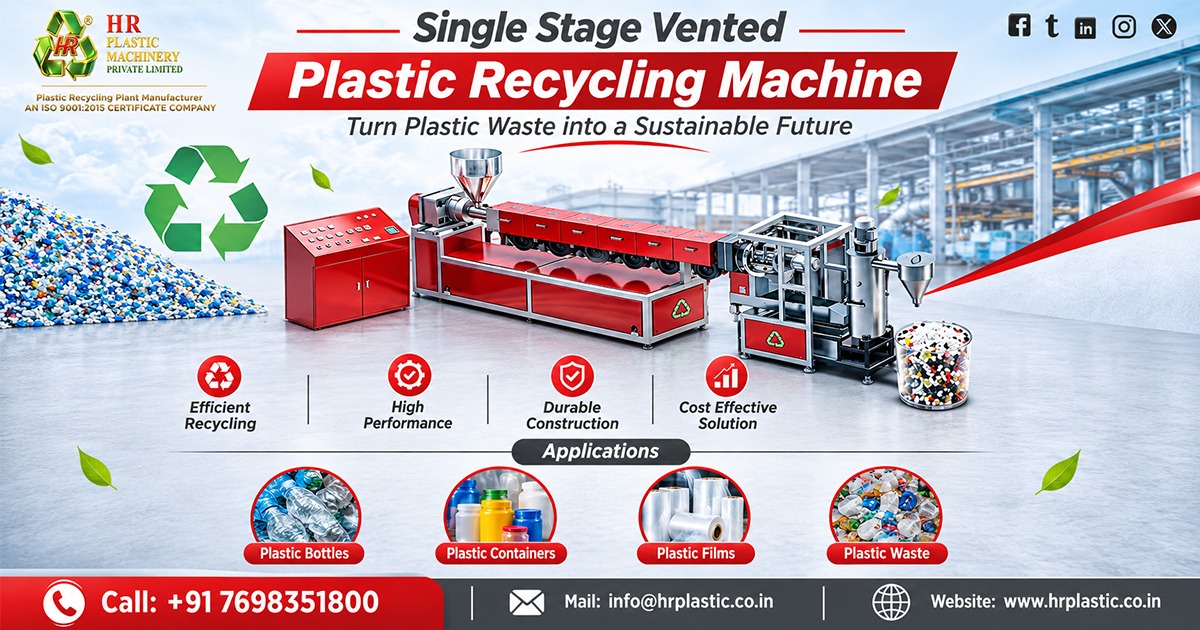
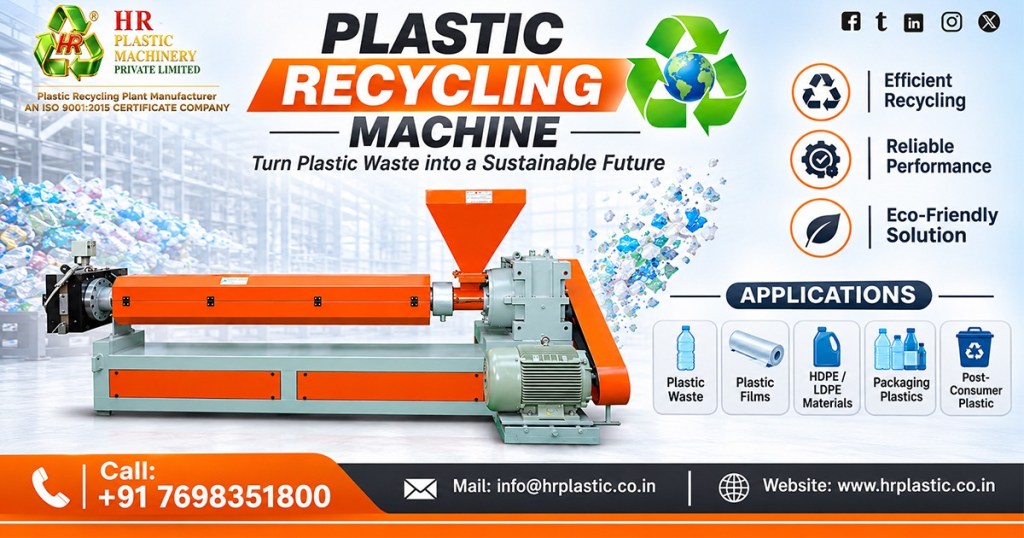
HR Plastic Machinery Private Limited manufactures plastic recycling and processing machinery, including industrial recycling plants, plastic scrap grinders, plastic dana-making machines, dryers and related equipment.
The company provides manufacturing support from Ahmedabad, Gujarat, India. Its machinery range includes equipment for different plastic processing requirements, including film waste and selected rigid plastic scrap applications.
Businesses can visit hrplastic.co.in to explore the available machinery range and discuss their requirements.
Before requesting a quotation, buyers can prepare details about their raw material, expected production volume, desired granule output, available factory space and power supply. These details help establish a more suitable machinery configuration.
Frequently Asked Questions
Q1: Can one recycling plant process both soft and hard plastic scrap?
A: It depends on the machine configuration and the compatibility of the materials. Soft films and rigid plastic scrap may require different feeding, preparation and processing arrangements.
Q2: What information should I provide when requesting a recycling plant quotation?
A: Share the plastic type, scrap condition, available quantity, expected hourly output, desired granule quality and factory utilities. Photographs or representative material samples can also help with requirement assessment.
Q3: Is a washing system necessary for every plastic recycling project?
A: No. The requirement depends on the contamination and moisture level of the incoming material. Relatively clean production scrap may need a different preparation arrangement from dirty post-consumer waste.
Q4: What should be checked when planning recycled granule production for another manufacturing unit?
A: Discuss the polymer type, colour, contamination limits, granule consistency and downstream processing requirements. The recycling process should be selected according to the specifications expected by the receiving manufacturer.
Conclusion
A successful recycling project depends on more than converting discarded plastic into granules. Raw material consistency, equipment compatibility, production planning and maintenance all influence operational suitability. HR Plastic Machinery Private Limited offers machinery options from Ahmedabad to help businesses evaluate their plastic recycling requirements.
Have a plastic scrap processing requirement? Contact HR Plastic Machinery Private Limited to discuss your raw material, production targets and suitable recycling plant configuration.
Visit: http://www.hrplastic.co.in
Email: info@hrplastic.co.in , sales@hrplastic.co.in
Call: +91 7698351800
View Product: Click Here